jueves, 13 de junio de 2019

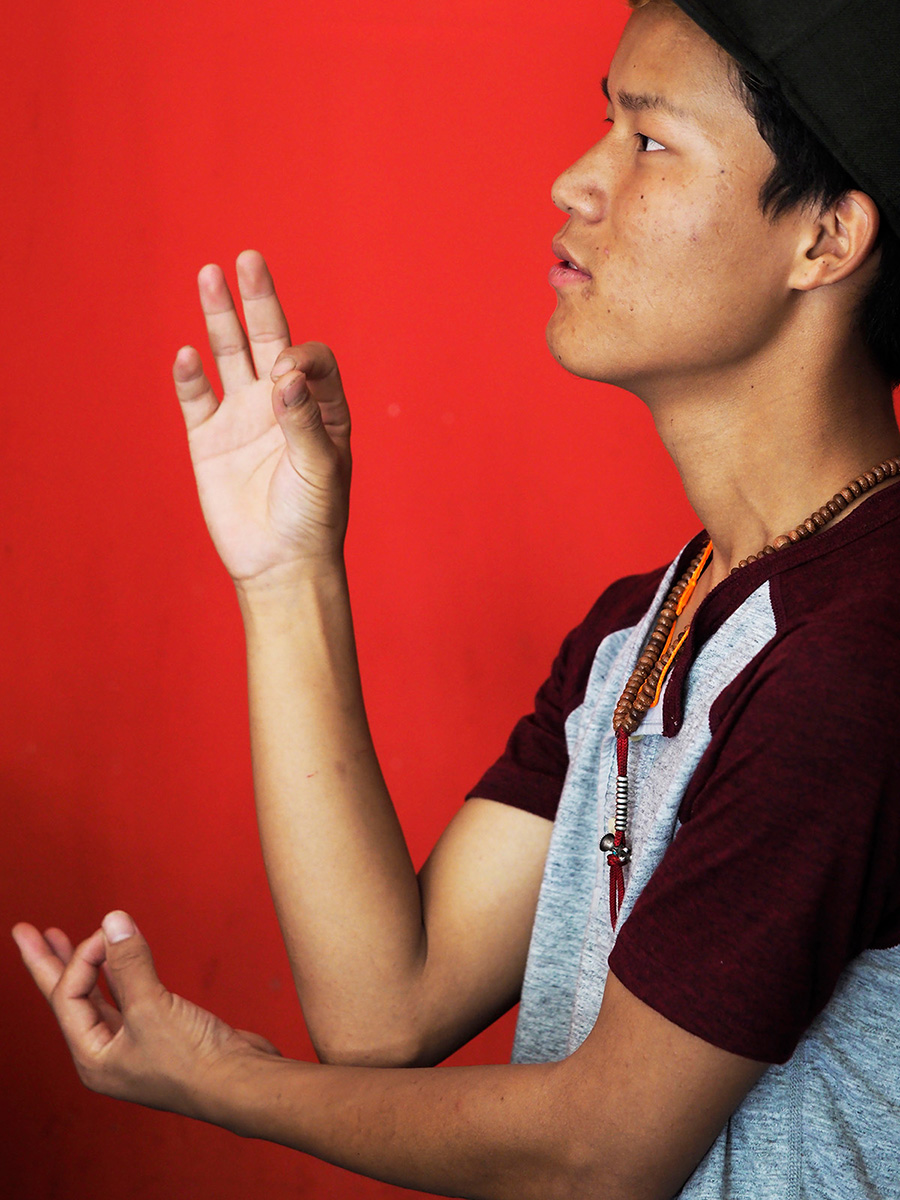
LAS MANOS DE BOUDHANATH- THE HANDS OF BOUDHANATH


No hay deleite más profundo que la inocencia.
La de un niño que nunca crece, por miedo al amor.

“Lo que más me sorprende del hombre occidental es que pierden la salud para ganar dinero, después pierden el dinero para recuperar la salud. Y por pensar ansiosamente en el futuro no disfrutan el presente, por lo que no viven ni el presente ni el futuro. Y viven como si no tuviesen que morir nunca, y mueren como si nunca hubieran vivido”.
(Tenzin Gyatso, Dalai Lama)

Cuando la alondra cantaba, miraba el cielo.
La sabiduría se ha convertido en pasado,
ahora todo es silencio. 
Todavía es primavera, y el cielo se ha cubierto de nubes.

----------------------------------------------------------

There is no delight deeper than innocence.
That of a child who never grows, for fear of love.

“What surprises me most about Western men is that they lose their health to earn money, then lose the money to regain their health. And by thinking anxiously about the future they do not enjoy the present, so they do not live either the present or the future. And they live as if they never had to die, and they die as if they never lived”.
(Tenzin Gyatso, Dalai Lama)

When the lark sang, she looked up at the sky.
Wisdom has become the past,
now all is silence. 
It is still spring, and the sky has been covered with clouds.


martes, 21 de mayo de 2019

TEMPLARIOS EN EL CAMINO DE SANTIAGO - TEMPLARS ON THE ROAD TO SANTIAGO

Contó Villasirga con hasta tres hospitales a lo largo de su historia. El más antiguo fue el de la Orden de los caballeros Templarios, el cual se situaba en la calle Grande. De su existencia da fe la Cantiga 218 de Alfonso X donde se indica como un peregrino alemán quedó paralítico y fue socorrido en Villasirga; actual Villalcázar de Sirga en Palencia.  
(La Enciclopedia Libre, Wikipedia)
                                           
                                                        Razon an de seeren  218

                                       Esta é como Santa Maria guareceu en Vila-Sirga
                                            un ome bõo d'Alemanna que era contreito.
                                           Razon an de seeren seus miragres contados
                                             da Sennor que ampara aos desamparados.


Gustavo Adolfo Bécquer (Gustavo Adolfo Claudio Domínguez Bastida). Sevilla, 17 de febrero de 1836, Madrid, 22 de diciembre de 1870.


“No son los muertos”
          
 No son los muertos los que en dulce calma
  la paz disfrutan de su tumba fría,
   muertos son los que tienen muerta el alma
   y viven todavía.

   No son los muertos, no, los que reciben
      rayos de luz en sus despojos yertos,
      los que mueren con honra son los vivos,
      los que viven sin honra son los muertos.

       La vida no es la vida que vivimos,
       la vida en el honor, es el recuerdo.
        Por eso hay hombres que en el Mundo viven,
           y hombres que viven en el Mundo muertos.


Pero todo se detuvo en el tiempo y se hizo presente Tu presencia. Entonces se elevó una oración en armonía con el reino que nos rodea, y con el silencio de una soledad compartida.

¡Tengo sed!

Y el alma de esta tierra me ofreció de beber y de comer, y un río de ternura alivió mi cansancio. 

----------------------------------------------

Villasirga counted up to three hospitals throughout its history. The oldest was that of the Order of the Knights Templar, which was located on Calle Grande. Cantiga 218 by Alfonso X testifies to its existence, indicating that a German pilgrim was paralyzed and was rescued in Villasirga; present Villalcázar de Sirga in Palencia.
(Wikipedia, The Free Encyclopedia)

Razon an de seeren  218

   Esta é como Santa Maria guareceu en Vila-Sirga
      un ome bõo d'Alemanna que era contreito.
     Razon an de seeren seus miragres contados
            da Sennor que ampara aos desamparados.        


Gustavo Adolfo Bécquer (Gustavo Adolfo Claudio Domínguez Bastida). Seville, 17 February 1836, Madrid, 22 December 1870.


"They are not the dead

It's not the dead that in sweet calm
peace enjoy their cold tomb,
dead are those who have dead souls
and they're still alive.

It is not the dead, no, those who receive
rays of light on their offal andertos,
those who die with honor are the living,
those who live without honor are the dead.

Life is not the life we live,
life in honor, is memory.
That is why there are men who live in the World,
and men who live in the world dead. 


But everything stopped in time and Your presence was made present. Then a prayer was raised in harmony with the kingdom that surrounds us, and with the silence of a shared solitude.

I am thirsty!

And the soul of this land offered me to drink and to eat, and a river of tenderness relieved my weariness.


lunes, 14 de enero de 2019

POR EL CAMINO DEL AGUA - BY THE WAY OF THE WATER

En el Albergue de Jesús, en Villar de Mazarife (León), los peregrinos que pasan por esa casa dejan en modo de grafitis sus testimonios. Hay uno que siempre me ha llamado la atención:

“Cuando la fuente se haya secado, construirás palacios con la sed”.

El pasado diecisiete de noviembre, siguiendo el curso del río Ebro, entre Haro y Briñas, que, por cierto, es parte de la séptima etapa del Camino Interior, realicé este trabajo fotográfico. La ausencia de sonidos, a pesar del caudal del río, me hizo pensar en lo que, a través de su obra, Jorge Oteiza nos transmitió sobre cómo “habitar el vacío”. 

- El vacío no es ausencia. 

Él nos hablaba de cómo el vacío organiza formas y transforma el espacio. 

El Ebro es eso en su función vital: organiza formas y transforma el espacio. ¿Hasta cuándo será así? En sus orillas todo crece, todo se transforma; crea vida. ¿Hasta cuándo será así?

“El color y los aromas todo lo invaden. Surgen formas del vacío. Otra vez la Naturaleza nos muestra y nos habla de las geometrías divinas”.

Cuándo voy pisando las hojas, algunas secas y otras no tanto, el sonido que se produce ¿está en las hojas, quizás en sus colores, o acaso, en la tierra sobre la que se posan? Puede ser que estén en las suelas de mi calzado. O en mi forma humana que conecta la Tierra con el Espacio.

- La respuesta está en el viento (como dice la canción), el viento que se crea en el vacío. 

No es silencio,
No es ausencia.
Solo es distancia,
Para recordarte.

In the Albergue de Jesús, in Villar de Mazarife (León), the pilgrims who pass through that house leave their testimonies in graffiti mode. There is one who has always called my attention:

 "When the fountain has dried up, you will build palaces with thirst".

Last 17th of November, following the course of the Ebro river, between Haro and Briñas, which, by the way, is part of the seventh stage of the Interior Way, I made this photographic work. The absence of sounds, despite the flow of the river, made me think about what Jorge Oteiza transmitted to us through his work on how to "inhabit the void". 

- Emptiness is not absence. 

He spoke to us about how emptiness organizes forms and transforms space. 

The Ebro is that in its vital function: it organizes forms and transforms space. How long will it be like that? On its shores everything grows, everything transforms; it creates life. How long will it be like this? 

"Colour and aromas invade everything. Forms of emptiness arise. Once again Nature shows us and speaks to us about divine geometries".

When I step on the leaves, some dry and others not so much, is the sound produced in the leaves, perhaps in their colors, or perhaps, in the earth on which they rest? They may be on the soles of my shoes. Or in my human form that connects Earth with Space.

- The answer is in the wind (as the song says), the wind that is created in the void. 

It is not silence,
It's not absence.
It's just distance,
To remember you.

Ritmo, color y calor, virtuosismo y alegría. También sueños. 

Rhythm, colour and warmth, virtuosity and joy. Also dreams.